 SemAgent
Panel overview
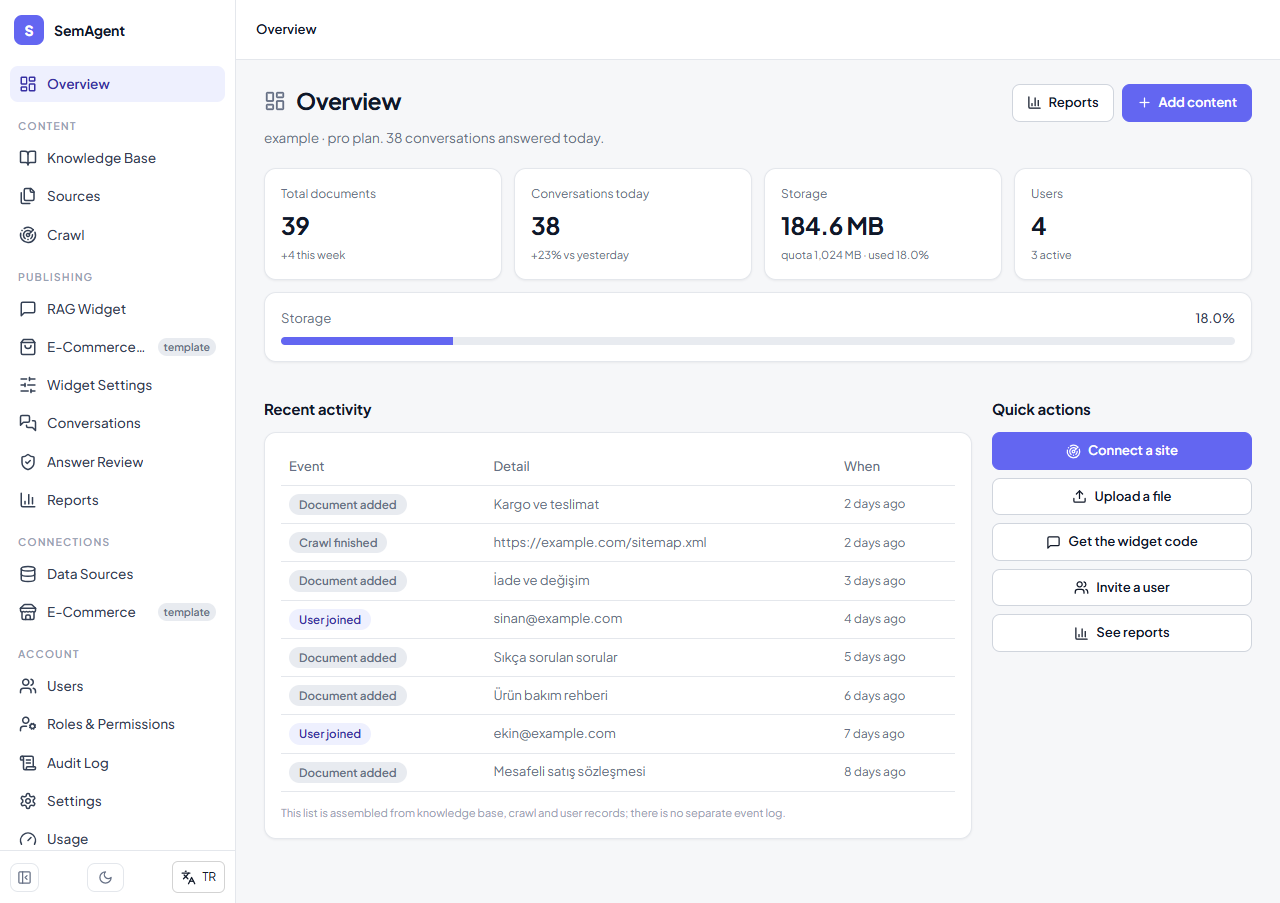
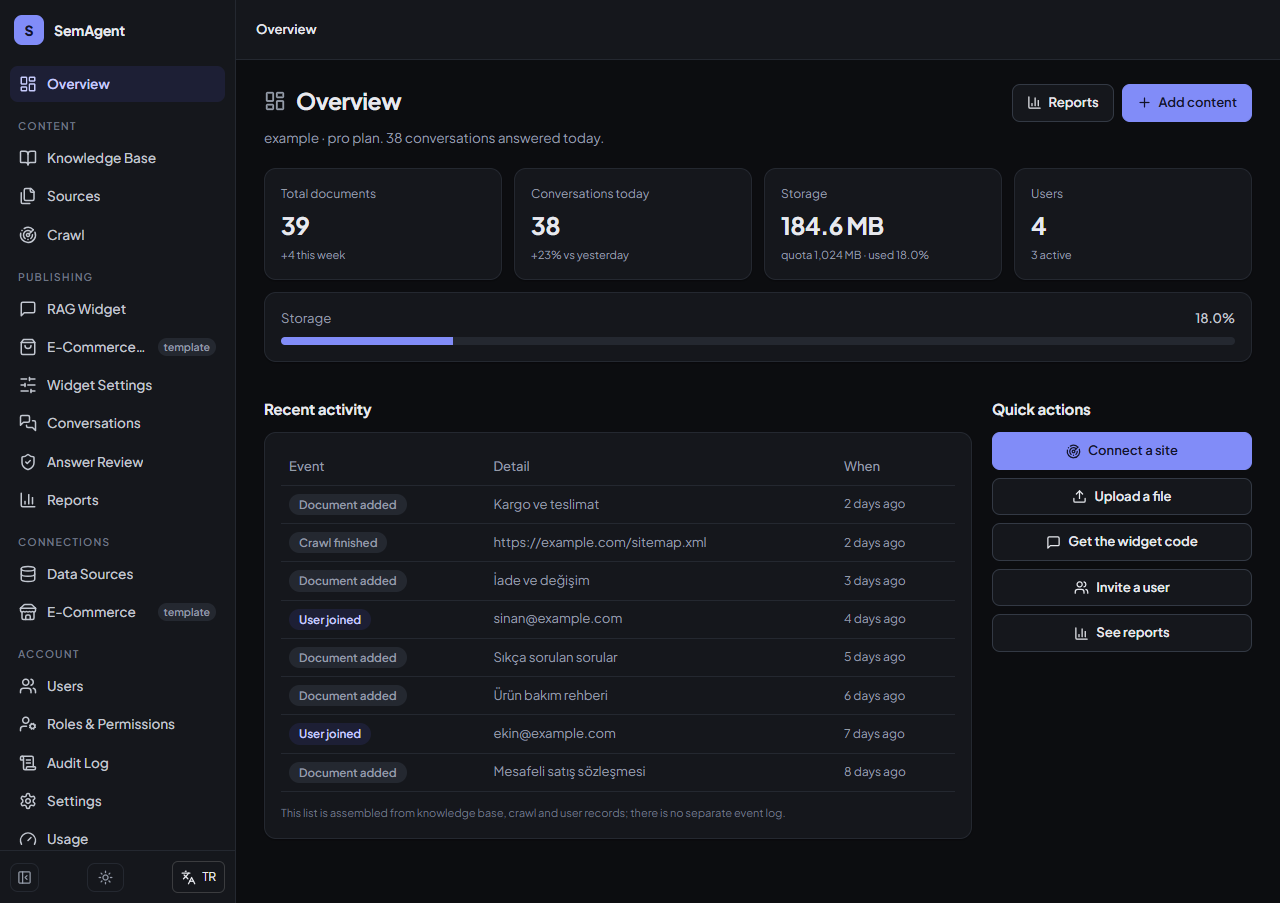
This section walks through the real panel screens one by one — where you do what. The SemAgent panel has two main surfaces, each for a different job.
Two main surfaces
Chat (/chat)
Where you talk to your own AI assistant — ask questions, get work done. Pinned/grouped conversation history.
🛠️Admin Panel (/settings)
The tenant admin hub: Knowledge Base, Users, Settings, E-Commerce, Widget code, Support and Subscription & Billing.
The Widget Dashboard is no longer a separate surface. Its tabs moved into the admin panel: live chats → Conversations, reports → Reports, usage metrics → Usage. The old address still resolves, but nothing in the panel links to it — open the new screens from the left rail.
What goes where?
| You want to | Screen |
|---|---|
| Ask the assistant / get work done | Chat |
| Add content to the knowledge base (URL/file/text) | Admin Panel → Knowledge Base |
| Connect an external system to the KB (DB, Drive, Notion…) | Data Sources |
| Embed the widget / set its appearance | Admin Panel → RAG Widget |
| Watch / take over live customer chats | Admin Panel → Conversations |
| See your usage / credits | Admin Panel → Usage |
| Upgrade the plan / manage billing | Admin Panel → Subscription & Billing |
| Invite a team member (RBAC) | Admin Panel → Users |
| Configure the agent (tools, memory, scheduling) | Chat → Agent Chat → /settings/agent-* |
| Ask for help | Admin Panel → Support |
| Review answer quality (👍/👎 feedback) | Admin Panel → Answer Review |
| See where the content came from | Admin Panel → Sources |
| Decide who sees what (role permissions, custom roles, folder scope) | Admin Panel → Roles & Permissions |
| See who did what in the account | Admin Panel → Audit Log |
Don't confuse the two "connector" concepts: Data Sources (/settings/connectors) connect an external system read-only into the knowledge base; Agent Connectors (/settings/agent-connectors) are for the agent to act on external systems (write/send). For the agent side: Tool reference.